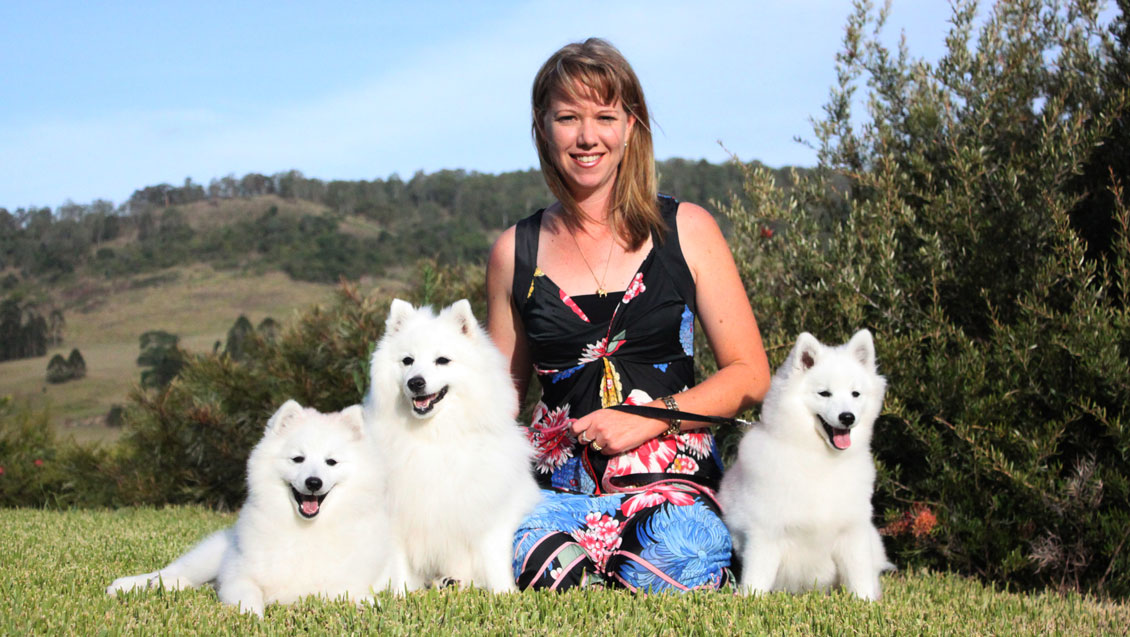
I have attached a few publications that I have come across that I though might be of interest. Please take the time to have a read - they are quite informative.

Publications

If a Dog Had Been Your Teacher - Poem

Caring for Your Shanspitz Puppy

Showing Your Japanese Spitz

Japanese Spitz Standard


If a Dog Had Been Your Teacher

If a dog had been your teacher, you would:

Always run to greet loved ones when they came home.

Never pass up the opportunity to go for a joyride.

Enjoy the simple experience of fresh air and the wind in your face.

Practice obedience.

Let others know when they’ve invaded your territory.

Take naps.

Stretch before rising.

Run, romp and play daily.

Enjoy attention and affection.

Avoid biting when a simple growl will do.

Lie on your back on the grass.

On hot day, drink lots of water and lie under a shady tree.

When you’re happy, dance around and wag your entire body.

No matter how often you’re scolded, don’t buy into guilt – run right back and make friends.

Delight in the simple joy of a long walk.

Eat with gusto and enthusiasm.

Stop when you have had enough.

Be loyal.

Never pretend to be something you’re not.

And, if what you want lies buried, dig until you find it.

And when someone is having a bad day, be silent, sit close by and nuzzle them gently.


CARING FOR YOUR SHANSPITZ PUPPY

This section will become a Bible for you. it will take you though all sorts of things from planning for your puppies arrival, feeding, vaccinations, worming, A step by step procedure for grooming your JS, socialising and house training.

Environment

Ensure that you have prepared for your puppies arrival before bringing him/her home. Your puppy will be away from their mother and litter mates for the first time and they will be looking to you for comfort. Having a well prepared area for them will provide security and comfort. Ensure that their sleeping and playing area is clean, has a food bowl, fresh water, bedding and toilet area set up. Make sure that this area is sheltered from wind, rain and sun. The first week is vital as the puppy will be adjusting to it’s new environment and bonding with it’s new family. Nights are usually the hardest and I have found that a hot water bottle and a clock that ticks are great for the puppy when going to sleep as the warmth will remind it of it’s mother and litter mates and the ticking of the clock will sound like the heart beat of their mother.

Make sure that your yard is fully fenced and puppy proofed. The last thing you want is for the new love in your life to go missing, be hurt by something falling on them, poisoned by gardening chemicals left around or having poisonous plants in their new yard.

Diet/Feeding Plan

The diet of your puppy is very important to ensure that they are getting all the vitamins, minerals and supplements that they need to grow up healthy. Your puppy will require 3 meals a day until they are at least 4 months of age.

Breakfast: I have found that warm puppy porridge or 1 wheat bix with warm puppy milk (not cows milk as this will cause an upset bowel) or puppy dry biscuits (Super Coat Puppy – available at Coles & Woolworths) soaked in warm puppy milk is a great way to start the day off. Otherwise you can give them a small amount from the Lunch or Dinner menu.

Lunch: Puppy dry biscuits with fresh beef or chicken mince or (Matilda Chicken Loaf – available at Coles & Woolworths). You can leave the dry biscuit separate.

Dinner: Fresh mince or beef loaf (Scotty’s Beef Loaf or similar – available at Coles & Woolworths).

Dietary supplements are a very good idea and Calcium is the number one thing that should be added to their meal once a day. Especially in the first 6 months of age as they are growing and the calcium is needed for strong bone growth. You should also use a vitamin supplement like “Missing Link” twice a week. Both of these are available from produce stores, pet shops or vet clinics.

Snacks: To promote healthy teeth raw bones can be given to your puppy. Chicken wings, Chicken necks and brisket bones are great. ALWAYS RAW. You may also like to give them dental bones, raw hide chews, pigs ears etc. These are great for the puppy to gnaw away at – better than your hands, feet, shoes etc.

Once they are approx 4 months you can change their eating pattern to two meals a day and by 6 months one meal a day.

I still give my dogs two meals a day. A chicken wing or chicken neck or a brisket bone for breakfast. They should always have a bowl of dry food to nibble on during the day. At night I give them a full meal of either beef or chicken mince cooked with rice and veggies or matilda chicken loaf. Variety is the key.

Vaccinations

Your puppy will be 8 weeks or more of age when you bring it home. They should have already received their first vaccination at 6 weeks of age. They will be due for the next vaccination soon. Check your new puppy’s vaccination card which the breeder should give you. Choose a vet that is close to you and one that you will continue to go to throughout the life of your dog. That way they know the history of your dog. The vet will give your puppy a full check over and advise you when the next vaccination is due.

Worming

Pups should be worked first at 2 weeks of age and then repeated at 4, 5 and 6 weeks of age. They should then be wormed every 2 weeks until 12 weeks of age and then 3 monthly after that.

Flea & Tick Prevention

Take it from me you will need to do this as their coat is so profuse and stand off that finding ticks is nearly impossible – well missing them is easy until they get full of blood and they are big and then you are in trouble.

I use Proban Tablets which need to be given orally every second day in the summer months and approximately 2 times a week in the other seasons. It does both fleas and ticks. It is excellent and I can’t stress enough how important it is to go over your dogs entire body 2 – 3 times a day checking for ticks. It will only take you 5 mins each time you do it and it could save you a $1000 bill from the vets or worse the loss of your dog. I also always use a flea and tick rinse after every bath, I use Fideo Flea and Tick Rinse Concentrate for Puppies and Kittens. You just add it to water and pour all over the dog (keeping it out of their eyes of course) and then you just need to towel dry and then blow dry your dogs coat.

Grooming

The Japanese Spitz only requires grooming about once a week when they are adults (except when they are shedding coat – then you will have to brush them daily for the week they are dropping coat) but as a puppy it is advisable to do it daily to help them get used to it. Only for 5-10 mins to adjust them to the feel of the brush.

What you will need to successfully groom your Japanese Spitz.

A brush that has long metal teeth with a cushion under the teeth
Metal Comb – preferably one that has two different size gaps between the teeth along the comb
Slicker Brush – great for getting knots out
Spray water bottle
Scissors
Nail Clippers
Talcum/Baby Powder
Chux/Face Washer

How to Groom your Japanese Spitz Puppy

Always spray the coat with a bit of water first as brushing a dry coat will split and break the hairs. If they are a bit dirty then hot towel them down before brushing – ie dip with a chux/face washer into hot water as hot as you can stand it and wring the chux/face washer out and then rub it through their coat and all over their body. You can add a bit of Eucalyptus oil to the water. Start from the tail and brush the coat up towards the head using your pin brush. . Use the slicker brush for the hair on the frond and hind legs
Turn them over onto their back and do their belly too. Clip hair between the paw pads. Clip the toe nails – be careful not to take too much off as it will hurt them and they will bleed profusely for about 15mins. If you do by accident trim a toe nail too short – to stop the bleeding pack the nail with pepper and keep the dog still until the bleeding slows and stops. Now sprinkle a little Talcum/Baby Powder on their belly and turn them over and sprinkle a little through the whole coat. Lightly brush the powder out and let them have a good shake before coming back into the house.

Washing your Japanese Spitz should only really need to be done about every month or so. If they do get dirty and you want to wash them remember to always give them a good brush before you wash them otherwise you will get matted hair all over the body especially if they are about to drop coat. I use a purple dog shampoo as this brings their coat up to a brillant white. A tick and flea rinse is a very good idea – I use Fido’s Flea and Tick Concentrated Rinse for Puppies & Kittens. This is great and you only have to add it to water and pour it through the coat after you have washed them and then just towel dry and then blow dry. Because they have such a big coat it is essential that you completely dry them. So blow drying is essential – you will find that the out coat will dry quickly but the under coat will take longer to dry. It takes me approximately 1 ½ hours per adult dog to wash them dry them and groom them. If you don't have the time you can always take them to a groomer and have them professionally done for a small fee. I recommend this to all my puppy people especially when their adult Japanese Spitz is shedding coat. It is just easier to get a professional to do the grooming for you when they are shedding coat.

They will never require clipping. The only part on the Japanese Spitz that requires clipping is the hair between their paw pads. This will need to be trimmed up about every 2 weeks. It is advisable to also cut their toe nails yourself as this will also need to be done every 2 weeks. Starting young makes life a lot easier for you and your puppy. Even if you just hold the nail clippers/scissors near their paws and just rub it on them to get them used to the feel of them to start with and then just do perhaps one paw a day to start with and work up to all four in the one grooming session. That way you won’t have fights with your puppy for not staying still as puppies have a very low attention span. When clipping the toe nails be very careful not to clip off to much of the nail as they have a blood vein in each nail and with their black nails you can not see this vein. I suggest that if you clip their nails every 2 weeks you will only have to take off a few millimetres each time.

Exercise

The Japanese Spitz is a lively little dog that does not require a large back yard and does not need to be walked every day. They tend to burn their energy up themselves by being busy little bees. That’s not to say that you can’t walk them every day. They love to go on outings. As a puppy though you should not start walking them until they are at least 3 months or older and start off with a 5 min walks and work your way up to a full 20 min walk.

I would recommend that you introduce the lead to them at about 8-10 weeks of age. Either a very light weight lead and a very small check chain or a very light weight lead that has a collar all in one. Try just putting it on them in the back yard and letting them just walk around on a loose lead with you. Don’t expect them to heal or act as if nothing has happened. They will probably fight against any pressure and it is wise not to place any pressure on the lead at this time. Introduce the lead to your puppy slowly and gradually over time in a controlled and non-distractive environment. Once he/she has masted the lead in the back yard and is happy to walk along with you then it is time to step outside the yard and try them on a short walk to start with. Slowly increase your walks. No more than 20 mins as this is plenty for this breed.

More Information About The Japanese Spitz

The Japanese Spitz Book – From Italy written by Marco G Piasentin.

About the Author and His Book

Marco G Piasentin was born in Dolo (Venice) Italy in 1942. He graduated in Chemical and Metallurgical Engineering and has spent his vocational career as a technical manager and managing director in the chemical and non-ferrous metals industries. He has never been a member of any association or committee of the official cynophile organisations nor is he involved in any commercial activity relating to dogs or other pets. He has simply had a great love of and vocational interest in animals in general since early childhood. His encounter with the Japanese Spitz goes back to 1984 when he discovered the breed with the help of some Japanese friends and became the first person in Italy to import this dog directly from Japan and breed it successfully.

It is the author’s intention to offer this book first and foremost as a token of gratitude to this lovely breed; it is the result of three years’ in-depth research work and over eleven years’ direct experience and it constitutes the first complete manual ever published on the Japanese Spitz.

The ten chapters of the book – illustrated with approximately 200 photo’s half of them in colour and over 50 drawings, tables and diagrams – provide the reader with detailed information about the origins of the breed and its characteristics as well as practical hints for optimum breeding and daily care of the dog.

Price= $75.00AUS.

If you are interested in purchasing one of these books let me know and I will arrange to have Marco send you one. (I wouldn’t be with out mine).

Your New puppy

What kinds of behaviour to expect from your new puppy, and how to encourage good behaviour instead of allowing bad behaviour. A dog is a commitment for the life of the dog.

Your First Goal - Socialisation!

When you get a new puppy there are some absolute rules you must follow to insure that your puppy grows up well adjusted. Puppies that are socialised young and correctly are less likely to become liabilities later in life.


Properly socialised dogs are not fearful of a particular age group, skin colour, or body type. If they are not fearful, they are less likely to run away from these people, bark at them or bite them to try to make them move away. Poorly socialised dogs lack confidence. These are the dogs that might bite if cornered. They may pull out of a collar and run away in fear of a stranger. They may bark at the sight of every strange thing that they never became accustomed to during their socialisation period i.e. people in wheelchairs, people wearing funny hats, people who walk with a limp.

How Do I Socialise My Puppy?

As soon as you get your puppy, start introducing him safely to all different sights and sounds. In a controlled situation, he/she should meet other animals, children of all ages, vacuum cleaners, stairs, crates, automobiles, pet stores, veterinarian's offices, and everything else you can think of. He/she should get to meet as many dogs as possible, as it is important they learn things from other dogs, like communication signals and social behaviour.

The key is to try to form neutral or positive associations with as many different sights, sounds, smells, and types of footing, around all kinds of people, places and things as you possibly can. Some people don't want to take their puppies out at an age when they don't have full protection from their puppy shots. I believe that the socialisation is very important and provided that this occurs in clean public areas, around other dogs that you know have been vaccinated and are up to date with their shots all should be OK.

When I say neutral or positive, this is very important. You must control all interactions with the puppy. Don't let some young child grope at your puppy and pull his fur. Don't let some adolescent child "rough house" with the puppy. Don't let anyone tease the puppy or try to frighten him. Everyone the puppy meets must be kind and gentle to the puppy. Never leave a puppy unsupervised with children of any age. Teach children, who will be associating with the puppy how to properly touch, pick up, hold, stroke, and talk to the puppy. It is important for the puppy to learn that humans can be trusted.

House Training

If you are going to have your puppy inside then you must teach him/her how to be clean in the house. This is extremely easy if done properly. Once your puppy is housebroken, it will be a lot less stressful for both of you to share your home.

Puppies are naturally clean. While still with the litter, the puppies learn to "hold it", until they are able to get out away from the nest or den area. They will automatically try to relieve themselves in an area away from their sleeping, playing and eating quarters. This makes a lot of sense when you think about it. With just a minimal amount of effort, your new puppy will transfer what he has already learned at the breeder's home, and learn to go in the desired area at his new home.

Puppies have very tiny bladders. They can't hold it for very long. Puppies must be taken outside many times each day, and given an opportunity to relieve themselves. Puppies also spend a great deal of time sleeping and playing. Each time a puppy wakes up, he/she will feel the need to empty themselves immediately. Each time the puppy has had an opportunity to play, he/she will want to go also. And, after eating, the bowels feel the urge to move, and they need to go again. What ever goes in, must come out. If it goes in on a regular schedule, it will come out on a regular schedule as well. Puppies naturally choose an absorbent surface to urinate upon, because then they will not want to walk in it.

It is very easy to take him/her outside when they need to relieve themselves But what about when you are not there to do this for them. You can't always be there as much as you might like during the day. But this doesn't mean that your puppy will learn poor housetraining habits. If you give your puppy free range of the house, you are asking for trouble. You must confine your puppy to a small area, so his/her choices are limited. If he/she must urinate or defecate where he/she eats and sleeps, he/she will choose to hold it as long as he/she can rather than to soil his/her living space. If you are not right there to take them outside at intervals during the day, you must provide an absorbent medium, like the puppy litter made from recycled newspapers, or the housebreaking training pads you can buy commercially. If you don't have these handy, regular newspapers will work, but often, the puppies prefer to "redecorate" their living space with the newspapers after soiling them.

Other than keeping their den area clean, what's in it for your puppy to relieve himself outside? You have to attach some kind of positive reinforcement for the puppy using the outdoors to relieve it’s self, instead of using your carpet. The puppy has a full adult brain at age 7 weeks. They can begin learning immediately. If you create a positive association with proper relieving, he/she will STRIVE to relieve themselves in the manner you desire to earn that reward.

I highly recommend clicker training as an excellent means to teach the puppy proper elimination habits. The clicker is a device that makes a snapping, that sounds unlike anything else in the puppy's environment. Paired with food, the puppy learns that this sound predicts the arrival of a treat of some sort. Once the puppy makes this association, he/she will make a conscious effort to repeat whatever behaviour he/she is performing when they hears the click.

When your puppy awakens, pick him/her up and carry them outside. Don't expect them to walk that far after waking up without peeing on the way to the door. If you make this mistake more than once, go get a rolled up newspaper and smack YOURSELF soundly, as you say "BAD OWNER, BAAAAAAAD OWNER!" Remember, the puppy is NEVER to be held accountable for "accidents." Everything that comes out where it is not supposed to is YOUR fault, so don't even THINK about punishing that sweet, innocent, helpless puppy for something you did wrong.

Take some treats and the clicker outside to where you'd like the puppy to relieve themself. Wait until the puppy squats. Get ready. You can gently give a "keep going" cue while he is going, like, "Good Puppy". When the puppy is finished going, click the clicker to mark the good behaviour of relieving themselves outside, and give the puppy a treat. You don't want to click at the beginning of the squat, as the puppy will stop relieving him/herself and run over for the treat. Do this every time you take the puppy outside. Give the puppy a chance to urinate and defecate each time they go out. Reward each time he/she does.

If you keep paying off the behaviour you want, the puppy will have ONE thought in their head when they get the urge to go: "Hold on! If I do it outside, it's worth cash and prizes!" Don't be surprised if you find your puppy in the middle of play, suddenly running to the door. They don't know how to GET outside, but they know they have to GO outside to cash in their "chips," so to speak. Of course, you're going to be right on top of things, and jump up with the clicker and food so you can properly reward them for asking to go outside (after he/she goes). It's important for you not to ignore this first attempt at getting outside on their own.

Remember, they won't have a clue as to how to get the door open, or how to get you to open it, they just know that the door is the way to the outside, and that's where they need to go. If you don't catch it, you may have to clean up a puddle, you'll have regressed on your housetraining, and you may have to smack yourself in the head with that newspaper a few more times to teach yourself a lesson! Pay attention! Your puppy doesn't know how to communicate his/her wishes yet. But if you are quick to reward their efforts of going to the door then he/she will also associate this with the relieving of themselves outside and the treat that follows.

My dogs were raised this way, and they communicated to me when they want to go outside. I don't have to reward them any more, and they never have an accident. They chose siting at the door and barking once to indicate to me that they need to go out. If that fails to get my attention they will come to me wherever I am in the house and jump up on me and then walk away watching me over their shoulder. At 10 weeks of age, they went to the door, looked at me, and barked once. I jumped right up and opened the door. They thought that was very clever (so did I), and they have been letting me know in this manner ever since.

Good Manners/Behavior

While you're going through the jobs of socialising and housebreaking your puppy, you need to be working on teaching him/her "socially acceptable" behaviors. Your puppy has no idea which behaviors are considered acceptable (by YOU) and which are not.

Face it, most NORMAL dog behaviors have some degree of unacceptability amongst humans. After all, they greet strangers by sniffing butts. Upon greeting a family member, they are compelled to lick their face or jump up on them. The whole world is just "chew toys" to them, and they have no way of knowing which things were put on earth for little dogs, and which things are irreplaceable family heirlooms.

An untrained dog is an opportunist. He/she will do things that reward him and avoid things that don't. Puppies can't reason and don't know that a behavior is good or bad. All the puppy can figure out is that certain behaviors are followed by pleasurable consequences and certain behaviors are followed by unpleasant consequences. It is YOUR job to make sure that none of the "bad" behaviors (ones unacceptable to YOU) get rewarded. For instance, if garbage raiding is successful in gaining the dog a yummy treat that was rubbish to you, he/she's going to try to repeat that behavior as often as possible. If sitting politely on the floor gets ignored by you, but jumping up gets you all excited and allows the dog to be close enough to lick your face, their going to choose jumping up over sitting politely every time, because that's what you've selectively rewarded. Maybe not intentionally, but that doesn't matter he/she learned it just the same.

You just have to stop rewarding the unwanted behavior and reward a more pleasing behavior in its place. Reward sitting with petting. Ignore jumping up. Reward staying away from the dinner table with a treat after dinner away from the table and in his/her food bowl. Ignore begging. Go pick up one of HIS toys, and act like it is the most special toy in the world. Toss it in the air and talk to it. Catch it and chase it. When he drops grandma's false teeth, engage him in a fun game with his own toy.

The tragedy is that people think that puppies can raise themselves to be model citizens (by human standards). Fat chance. People don't want to put in the time to prevent unacceptable behaviors and foster good behaviors.

So, now that you know all of this, and you want to keep your adorable puppy, in your family his whole life long. Here are some simple steps you can take. You can teach your dog these things starting at 7 weeks of age. You don't have to wait to get into an obedience training class to do them. It's a simple list of do's and don'ts. If you catch yourself doing any of the things in the "DON'T" column, get that rolled up newspaper and swat yourself with it until you come to your senses.

Reward the Good + Ignore the Bad = Success (a simple formula to produce a good puppy)

DO


· reward sitting quietly (sit for attention)

· encourage play with the dogs toys only

· reward the dog for being quiet ("good quiet")

· feed the dog when he sits politely

· reward the dog each time he comes to you

· exercise him to prevent boredom

· let him earn his treats as rewards

· reward him for waiting at doorways

· reward eye contact every time you get it

· reward loose-leash walking with forward motion

· DON'T stroke the dog if he/she jumps up (turn away)

· DON'T chase the dog to get back your belongings

· DON'T yell at the dog for barking (attention = reward)

· DON'T put the bowl down while he/she's jumping around

· DON'T scold them if they run off, then comes back (never scold when he/she comes to you)

· DON'T punish for habits developed due to boredom

· DON'T give him/her anything he/she wants because their cute

· DON'T let them barge through the door first

· DON'T move at all if he/she pulls the leash tight

A reward can be a treat, a game, a toy, attention, petting, eye contact, or access to something the puppy wants (like to go through a door, or to continue a walk). Even yelling can be a reward to a dog that never gets any kind of attention. Be careful what you reward with.

A punishment is withholding a reward not physical contact. You never have to get nastier than that. The most powerful punishment is to ignore the dog. This means no reaction at all, not even eye contact as this could be perceived by the dog as successfully getting your attention.

Off To School - Obedience Classes Are For Every Dog

In the old days, people only signed up for an obedience training course if they planned to pursue competition obedience. Nowadays, everyone signs up for training classes, and they are called "pet dog training" classes, or "manners" classes, because they teach more than just the things you need to learn to compete in obedience trials. They teach the basics of control, and mix in some learning theory, and help with problem behaviors. Training classes, no matter what they're called, are a MUST for every puppy, just as going to school is a must for human children.

In your obedience class, you will go beyond what you've taught your dog at home, and working in a class will show your dog that he must obey you even when surrounded by distractions. If you are asked to harshly correct or punish your dog with leash jerks or other punitive measures, you do not have to do so. Maybe you should look for a different class that uses positive methods, which will make learning more fun for you and your dog.

Many people quit attending classes after having gained a bit of control over their dog and teaching them a few basic cues. Perhaps an advanced course is not for everyone, but you might check to see if your club or training school offers other classes for your dog. Many places have trick training classes, agility, flyball, scent-work, or other fun things you can do with your dog. You don't have to have a desire to compete to enjoy these recreational activities. They're a lot of fun.


Showing Your Japanese Spitz

Step 1 – Join Your Local Canine Control Council

To be eligible to show your dog you will have to become a member of your local Canine Council. Look up on the internet or in the white pages and contact them to get the relevant forms to join as a member. Annual fees vary from Council to Council but expect to pay approx $100.00 per year to be a member.

Once you have done this they will send you back your membership card which will have a membership number on it.

Step 2 – Register your puppy under your membership number

If you were not a member of your Local Canine Control Council when you got your puppy, and the breeder was unable to register the puppy under your name and number you will have to fill out the relevant form to get your puppies membership number. If you did have your Local Canine Control Council membership number then you will have to call up the office and tell them that you have now purchased a puppy and give them all the details on your pedigree that came with your puppy and they will register the puppy against your membership number. You will have to do this before you can enter a show.

Step 3 – How to Enter Shows

As a member of your Local Canine Council you will receive in the post their Dog World or Magazine each month. This Magazine will have lots of articles on things happening in the Dog World and near the back of the magazine it will have all the show schedules that have been planned for the coming month. You will have to buy from your Local Canine Council a book of Show Entry Forms as these are required to be filled out for each show and sent to the Show Secretary for that show which will be in your Dog World Magazine under the show you are entering. You can order a catalogue when you put in your entries. It is worth the $2.00 or so as it will give you an idea of how long before you will be in the ring (they say an approx of 40 dogs a judged per hour) and also it makes good reading of who has entered not only in your breed but in the whole show. In the catalogue you can write down the results and keep these as a record keeping system. If the show schedule asks for you to include a self addressed and stamped envelope then do this as they will send you back your numbers, which you will then have to remember to take with you to that so, if they do not ask for an envelope then you will need to pick up your numbers from the office at the show along with your catalogue. Just ask someone at the show where the numbers a being handed out. Sometimes at the country shows they are set up under a marquee/gazebo somewhere.

Once you have entered your shows, write your shows in a diary. I put on the show date in my diary where it is at, what time it starts, what dogs I have entered and in what class. I then put on the Monday before hand a note to remind me that I have a show on that weekend. That way I won’t get to Friday and turn my diary over and realise I have a show the next day and I have not prepared myself of my dogs.

Your First Show

What you will need:

Show pin to hold your number or arm band to hold your numbers, Pin Brush One without any balls at the end of the pins as this will rip the coat, Slicker Brush, Metal Comb, 2 x Spray Bottles, One for water with diluted coat conditioner and one for water and diluted shampoo, Towel, Chux or soft cloth. Lead and Collar – Get either a show lead that has a collar all in one or a check chain and a show lead. Ask your pet shop for suppliers or go online to find these. Bait – what ever food your puppy response well to Small squeaky toy. This helps to get your puppies attention Showing outfit. It is best to dress in work type attire, so pants suits, skirt suits or pants and jacket. Remember you will need pockets either in your pants or our jacket for your bait. Show Trolley - You will notice when you start showing that most exhibitors have show trolleys. They are on wheels so you can put your dogs in them securely and when you need to take them out and groom them on top. They are the best investment you will make for your showing career. You can get them from a company called c-crates there web address is: http://www.ccrates.com.au/supa.html Or you can contact your local produce or pet shop for supplier details.

How to Show Your JS:

Judging Order

Baby class is the only class that does not get to go back in for challenge line up. As babies you are not eligible to get points only when you move up to Minor class are you eligible for the Challenge Line up. You are however eligible for going back in for General Specials in the Baby Class against all the other babies in Group 7 that have one.

All the Male Dogs are exhibited first in age order. The classes are:

1 Baby Dog

2 Minor Dog

3 Puppy Dog

4 Junior Dog

5 Intermediate Dog

10 Australian Breed Dog

11 Open Dog

Who ever gets 1st in each of these classes will go back in the ring at the completion of the Open Dog class. This is called Challenge Dog Line Up. This is where you get points for winning. The Dog that wins Challenge Dog will then go in the Best of Breed Line up after the completion of the Female Open class.

Now all the female dogs are exhibited in age order. The classes are:

1a Baby Dog

2a Minor Dog

3a Puppy Dog

4a Junior Dog

5a Intermediate Dog

10a Australian Breed Dog

11a Open Dog

Who ever gets 1st in each of these classes will go back in the ring at the completion of the Open Bitch class. This is called Challenge Bitch Line Up. This is where you get points for winning. The Bitch that wins Challenge Bitch will then go in the Best of Breed Line Up against the Dog that won Challenge Dog.

Who ever gets 1st here wins Best of Breed. They will leave the ring and who ever got second to that person will go back in the ring against the other dog that is still in the ring. So if the male gets Best of Breed the 2nd winner of the Challenge Dog Line up will have to go back in but if the female gets Best of Breed the 2nd winner of the Challenge Bitch Line up will have to go back in. This is for Reserve Best of Breed

What To Do In The Show Ring

1. When your number is called to enter the ring by the Steward they will either tell you what to do or the judge will, so make sure you are alert and listening to your instructions. It is best to watch what others have done before you in the ring as this will give you an idea of what the judge is going to ask you to do.

2. As the JS is a table dog (meaning when the judge goes over your dog it will be up on a table. Table dogs are 15 inch and under) the table can be set up anywhere in the ring. Usually away from the entry and mostly in the middle of one side. So you will enter the ring with your dog on your left at all times and the judge will stand in the middle of the ring. Most of the times they ask you to go around the ring and to the table. So do a circle around the judge (say 20 meters in diameter, depending on how big your ring is) as babies it is best to do a fairly small circle but you want the circle big enough for the judge to see your puppy moving.

3. Once you get to the table. Stop behind it and pick up your puppy and place them on the table setting it up square at the front left hand side of the table cloest the the judge. This way it is easy access for the judge to go over the dog.

4. The judge will stand back and look at your dog one you have set it up on the table nice and square. They will then approach the table and come around the front to view the puppies head and to check their mouth for a correct bite. They usually ask how old so make sure that you have worked this out before you go in the ring. You are to stay on the side holding your puppy while the judge inspects the head.

5. The judge will then move to the side of the puppy and you are then to move to the front and hold your puppy either behind the ears or behind the front legs. Just try and keep your hands out of the way of the judges. The judge will run their hands down the front legs and under the chest and along the back to the tail and then move to the back of the puppy to check the back end. Just stay where you are keeping your puppy still.

6. When the judge has finished going over your puppy they will ask you to do either a triangle, or go out and back, or a circle. Some of them once you have done say a triangle will then ask you to do a circle around the ring again. When you have finished they will award you 1st if you are on your own.

7. If you are not the only baby then just wait your turn while the dog in front of you has done their thing with the judge. If there is a dog in front of you it is best that you are ready to put your puppy up on the table once the other one has left it and is off doing her walk around the ring so when the judge turns around to see you are up on the table with your dog standing nice and square ready for them to inspect. If you are first in line then make sure that you have your dog standing on the ground nice and square and still so when the others have finished and return to the line behind you yours is already set up for the judge to view again. These are just little handling tricks that are really handy and work. Being prepared and having your dog doing everything right the whole time you are in the ring as if the judge was watching you the whole time is my motto. You are only in there for a few minutes at a time and being prepared and showing your dog off the whole time makes a huge difference.

8. If there are more than one of you in the ring at one time, and once the judge has gone over you all on the table they will usually start at the top of the line and look at the dogs and walk down the line. Sometimes they then get all dogs to go out away from the judge in a straight line and then back to them stopping a few meters in front of them and getting your dog to look at your hand and sometimes the judge will make a noise to get the dogs to look at them. They will then move up the line and ask all to do the same. Sometimes they ask you all the go around the ring in a circle together so they can see all the dogs moving at once. It is always a good idea to keep eye contact with the judge and also watch where you are going at the same time and watch your puppy so that if the judge wants you as first you will see them point to you. They do usually say I will have the male or bitch or say what class they are in ie I’ll have the Open Dog thanks.

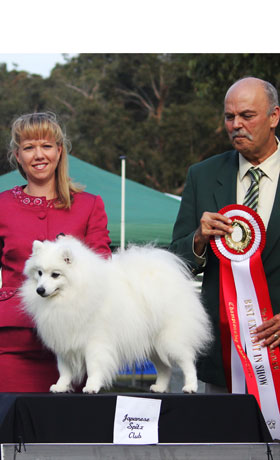
9. If you win your class or Best of Breed or anything you are to move to a blue maker that they should have in the ring and the steward will call out your number and announce what you have one. If they do not have a marker move to the side of the ring near the steward and wait for them to call out these details before leaving the ring. You are not to leave the ring until they have called out these details.

10. It is best to stay near the ring and just wait to see if the steward calls your number again. Just while you are learning how it all works just hang around to see if you are called in to the ring again. Once you have done a few shows you will get the hang of it.

11. Now that completes the showing for the JS breed, unless there are dogs and bitches in the same age class. If this is the case they will have to do run offs to choose the best for each of these classes.

12. The next thing will be General Specials. This is done after the completion of judging in Group 7. So once they have finished with the Tibetan Terriers you will know that Group Specials is next.

13. First in the ring will be all the Best of Breed Winners so one dog from each breed will be called out and will enter the ring. Once all the dogs are in the ring lined up the judge will decide on who will get Best Exhibit in Group and Reserve Exhibit in Group. Now if the Best Exhibit in Group is from the Open Class then they have automatically one that Open Class, same for the Reserve Exhibit in Group if they are from the Intermediate Class then they have automatically won that class. So any dogs ready to go in from the Open and Intermediate class have been knocked out and those classes will be skipped in the Group Specials.

14. Next in the ring will be all the winners of the Baby Class. So one baby from every breed will be called out and will enter the ring. Once all the babies are in the ring lined up the judge will decide who will be Baby in Group.

15. Next in the ring will be all the winners of the Minor Class and so on through all the classes. Once they have finished all the classes that completes the judging of Group 7 for the Day.

16. Next is the judging for General Special so the In Show judging. Only those dogs from Group 7 that won either Best Exhibit in Group, Reserve Exhibit in Group, Baby In Group, Minor in Group, Puppy in Group, Junior in Group, Intermediate in Group, Aust Breed in Group and Open in Group need hang around for the In Show Judging. This cannot commence until all the other groups have completed their judging. General Special “In Show Judging” usually does not happen until late in the arvo at most shows.

17. First in for General Specials will be the Best Exhibit in Group from all the groups. They will go in and be judged and who ever wins Best in Show ie if a Standard Poodle Wins which is from our group then the Reserve Exhibit in Group 7 will go into the ring to be considered for Reserve In Show.

18. They will then run through the age classes again starting with the Baby class. Remember that what ever class the Best in Show and Reserve In Show are out of have automatically be won by these dogs and any dogs waiting to go in for those age classes are now knocked out.

19. Once all this is done then the showing is now completed and the show if finished.

Good luck and please call me if you need any help or don’t understand how it all works. I am more than happy to run through any questions that you might have.

Shannon Watherston 0424 708 889 or email shannon@japspitz.com

Japanese Spitz Standard

Kennel Club, London 1994

Amended 05/04

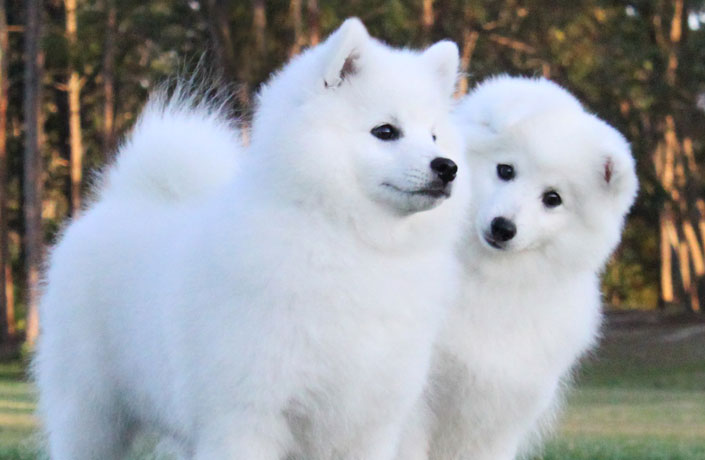
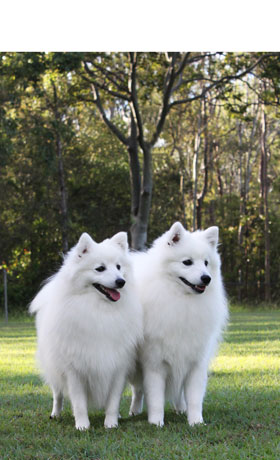
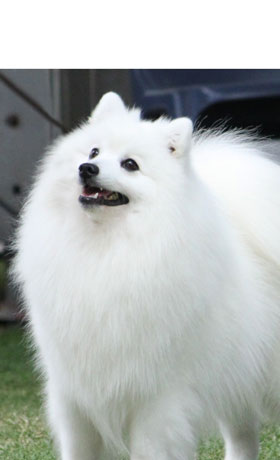
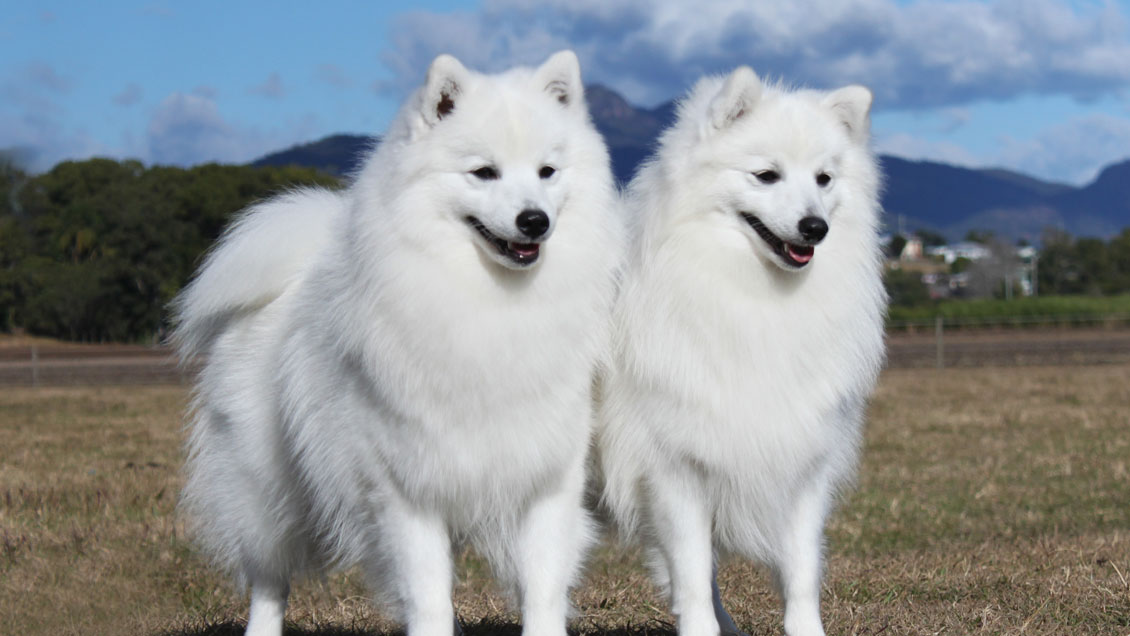
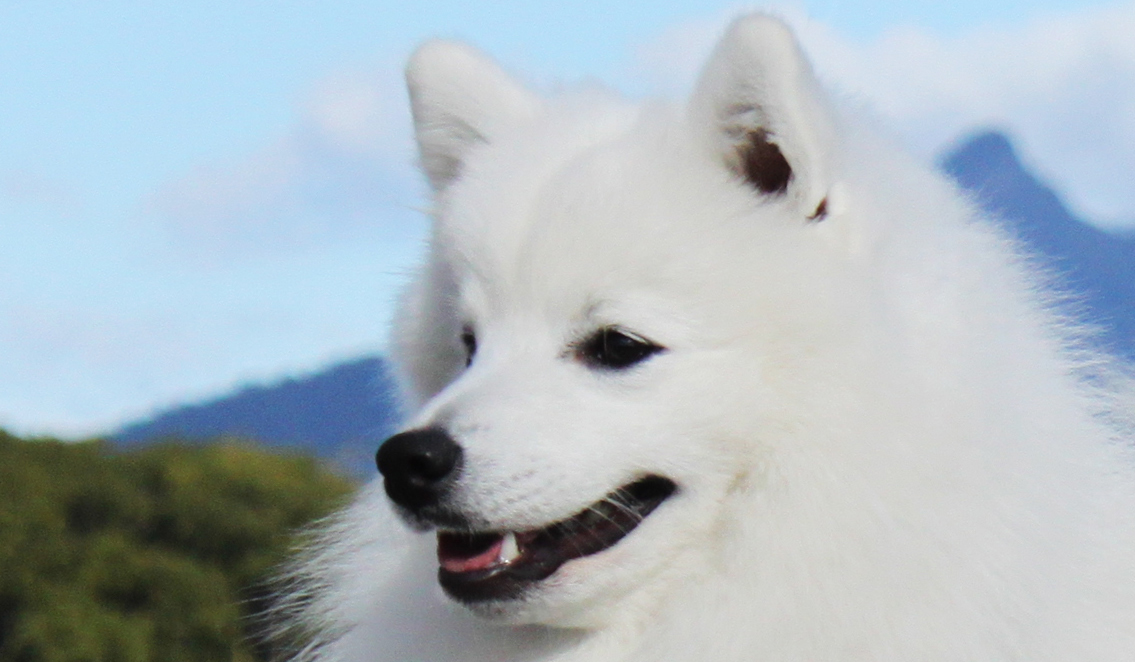
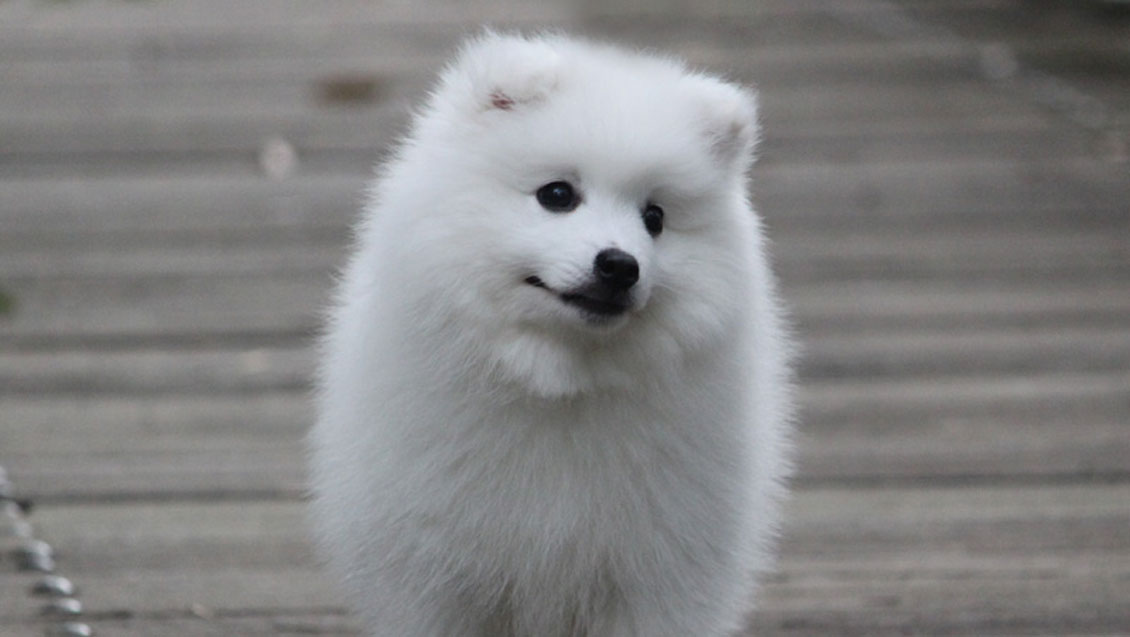
GENERAL APPEARANCE - Profuse, pure white, stand-off coat. Pointed muzzle, triangular shaped ears standing erect. Bushy tail curled over back. Overall quality of body firm and strong, full of flexibility. Ratio of height to length, 10:11.

CHARACTERISTICS - Affectionate, companionable. Slightly chary at first meeting with strangers.

TEMPERAMENT - Alert, intelligent, bold and lively.

HEAD AND SKULL - Head medium size, without coarseness; moderately broad, slightly rounded. Skull broadest at occiput; well defined stop; forehead not protruding. Muzzle pointed, neither too thick nor too long. Lips firm, tightly closed, black. Nose round, small and black.

EYES - Dark, moderate size, oval shaped, set rather obliquely and not too wide apart; black eye rims.

EARS - Small, triangular, standing erect. Set high, facing forward, not too wide apart.

MOUTH - Jaws strong with perfect, regular and complete scissor bite, i.e. the upper teeth closely overlapping the lower teeth and set square to the jaws.

NECK - Strong, arched and of moderate length.

FOREQUARTERS - Well proportioned and balanced. Shoulders well laid. Forelegs straight; elbows firm and tight; pasterns slightly sloping.

BODY - Chest broad and deep. Ribs powerfully sprung; belly moderately firm with good tuck-up. Back straight and short. Loins broad and firm. Croup slightly arched.

HINDQUARTERS - Well proportioned and balanced. Muscular, moderately angulated. Hind legs parallel to each other viewed from rear.

FEET - Small round, cat-like and well cushioned. Pads black, nails preferably dark.

TAIL - Moderate length, root set high, curled over back.

GAIT/MOVEMENT - Light, nimble, active, energetic and very smooth.

COAT - Outer coat straight and stand-off. Profuse, short, dense undercoat, soft in texture. Shorter on face, ears, front of fore and hind legs and below hocks. Remainder of body covered with long coat. Mane on neck and shoulders reaching down to brisket. Tail profusely covered with long hair.

COLOUR - Pure white.

SIZE -
Height at shoulders:
Dogs 34-37 cms (13½- 14½ ins)
Bitches 30-34 cms (11¾-13½ ins)

FAULTS - Any departure from the foregoing points should be considered a fault and the seriousness with which the fault should be regarded should be in exact proportion to its degree.

NOTE - Male animals should have two apparently normal testicles fully descended into the scrotum.

Non-Sporting Group A.N.K.C. © January 1998


PhotoAlbum.htm Our Dogs/Progney Frequently Asked Questions Latest News and Events on Shanspitz Publications available for Download Discussion Forum -  please post! Puppies Litters